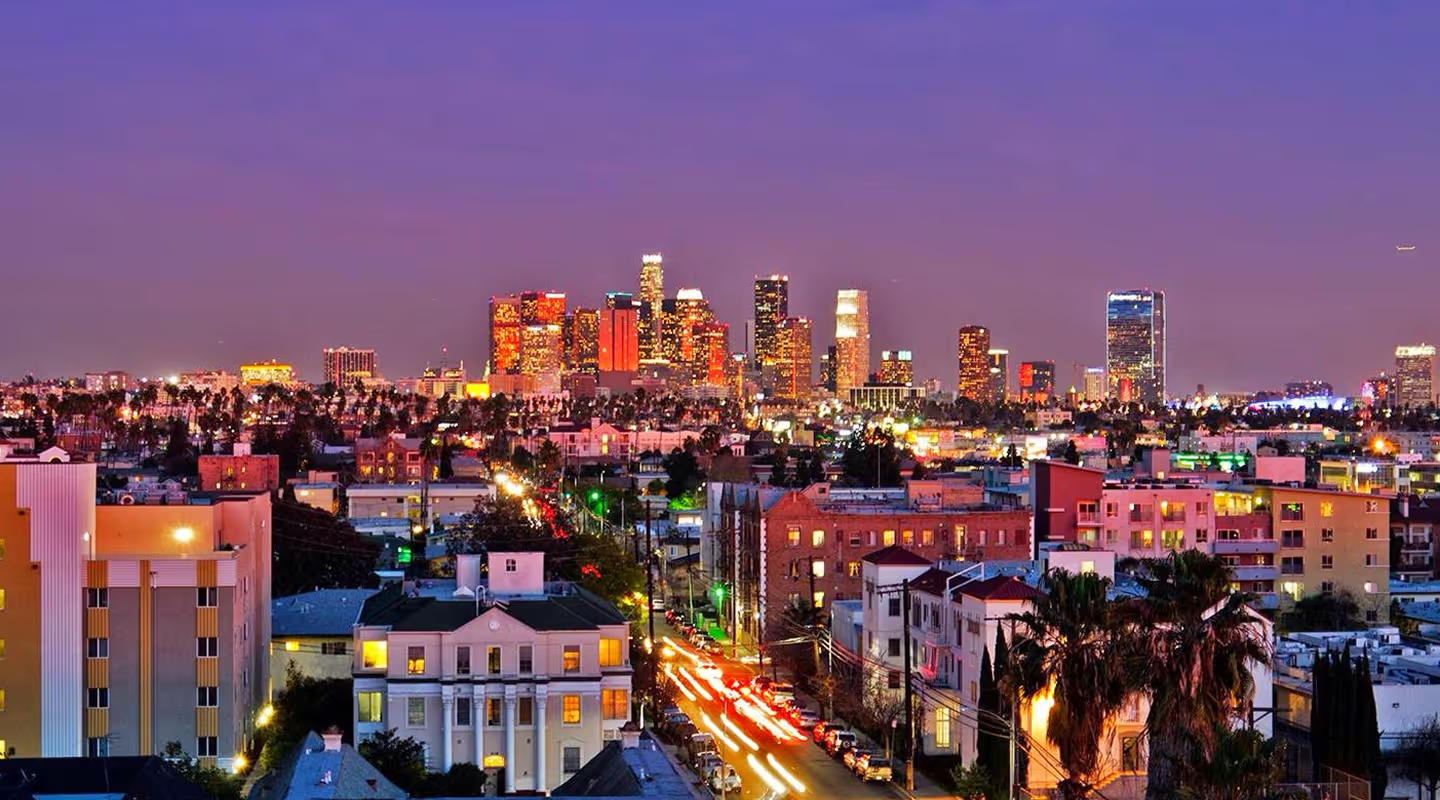
Koreatown, known locally as K-Town, is one of the most vibrant and culturally rich neighborhoods in Los Angeles. Spanning roughly three square miles in the heart of the city, this densely packed district offers an extraordinary range of dining, shopping, entertainment, and nightlife. Whether you are a student exploring LA, a local looking for something new, or a visitor discovering the city for the first time, the things to do in Koreatown Los Angeles will keep you busy for weeks. This guide covers the best restaurants, shopping destinations, nightlife spots, and cultural experiences that make K-Town a must-visit part of the city.
Exploring Koreatown Los Angeles
Koreatown sits just west of downtown LA, bordered roughly by Vermont Avenue to the east, Western Avenue to the west, Beverly Boulevard to the north, and Olympic Boulevard to the south. The neighborhood is one of the most densely populated areas in the entire United States, which gives it an energy and walkability that many parts of car-centric LA lack.
The area's history stretches back to the early 20th century, but it became the Korean cultural hub of LA starting in the 1960s and 1970s when waves of Korean immigrants settled there. Today, K-Town is far more diverse than its name suggests. While Korean culture remains the dominant influence, you will find residents and businesses from Mexico, Guatemala, Bangladesh, Ethiopia, and many other countries. This multicultural mix creates a neighborhood that feels like a world within a city.
Getting around Koreatown is easier than in most parts of LA. The Metro B Line (Red) and D Line (Purple) both stop at Wilshire/Vermont and Wilshire/Normandie stations, putting K-Town on the rail map. Numerous bus lines run through the neighborhood, and its compact layout makes walking between destinations practical, something that is rare in Los Angeles. For more on navigating the city, see Living in Los Angeles: International Student Guide.
For international students, Koreatown offers an appealing combination of affordability, convenience, and cultural richness. Housing costs are lower than in Westside neighborhoods, dining is abundant and reasonably priced, and the area's central location provides easy access to schools along the Wilshire corridor.
Best Restaurants and Food in Koreatown

Food is the beating heart of Koreatown, and the neighborhood's restaurant scene is one of the best in all of Los Angeles.
Korean BBQ is the signature dining experience. Restaurants like Park's BBQ, Quarters Korean BBQ, and Kang Ho-dong Baekjeong give you premium cuts of meat that you grill at your table. The experience is communal and interactive, making it perfect for group outings. Prices range from affordable all-you-can-eat spots to high-end destinations.
Tofu houses and stews are comfort food staples. BCD Tofu House, open 24 hours, serves bubbling bowls of soon tofu jjigae (soft tofu stew) that warm you up on cool evenings. Sun Nong Dan is famous for its galbi jjim (braised short rib stew), a rich, slow-cooked dish that draws long lines.
Street food and casual eats abound in K-Town. Myungrang Hot Dog serves Korean-style corn dogs coated in crispy batter and drizzled with sugar. Ddeokbokki (spicy rice cakes) and tteok (rice cake snacks) are available at multiple spots throughout the neighborhood. Boba tea shops line the major streets, with popular choices including Tiger Sugar and Ding Tea.
Non-Korean dining reflects the neighborhood's diversity. Guelaguetza serves Oaxacan Mexican food that is considered among the best in the city. Ethiopian restaurants along Olympic Boulevard offer communal platters of injera and stew. Thai, Japanese, and Chinese restaurants fill in the gaps, ensuring that no matter what you are craving, K-Town delivers.
Late-night eating is a K-Town specialty. Many restaurants stay open until 2 AM or later, and some are 24 hours. After a long day of classes or a night out, finding a hot bowl of soup or a plate of Korean fried chicken at midnight is effortless.
Shopping and Entertainment in Ktown

Beyond food, Koreatown offers shopping and entertainment experiences that you will not find anywhere else in LA.
The Line Hotel and The Normandie Club represent K-Town's boutique hospitality scene. The Line Hotel, housed in a mid-century modern building, features a popular rooftop pool, the restaurant Openaire, and regular cultural events. It is a stylish gathering spot that attracts a creative crowd.
Koreatown Plaza and Koreatown Galleria are indoor malls that feel like transplants from Seoul. You can browse Korean beauty products, fashion, electronics, and specialty food items. The food courts in both malls are destinations in themselves, offering affordable Korean dishes in a casual setting.
Explore Koreatown and all of LA while studying English at CWC. Columbia West College's campus is conveniently located near K-Town along the Wilshire corridor. Discover CWC's programs.
Korean spas (jjimjilbangs) are a quintessential K-Town experience. Wi Spa and Aroma Spa are large, multi-story facilities with saunas, hot tubs, steam rooms, and relaxation areas. Many offer 24-hour access, making them popular for late-night unwinding or even overnight stays. The communal spa culture is a unique part of Korean tradition that has become a beloved LA institution.
Karaoke (noraebang) is everywhere in Koreatown. Unlike Western-style karaoke bars where you sing in front of strangers, Korean noraebang gives you a private room with your friends. Chains like Pharaoh Karaoke Lounge and Max Karaoke Studio offer rooms ranging from cozy two-person booths to large party rooms. Song selections span Korean, English, Spanish, Japanese, and more.
K-beauty and skincare shops line the streets of Koreatown, offering products from Korean brands that have become global sensations. The Face Shop, Aritaum, and numerous independent beauty stores stock everything from sheet masks to serums. For beauty enthusiasts, a K-Town shopping trip is a treasure hunt.
Nightlife and Culture in Koreatown

When the sun goes down, Koreatown transforms into one of LA's most dynamic nightlife destinations.
Cocktail bars and lounges have flourished in K-Town in recent years. The Walker Inn, hidden behind a restaurant, was once named one of the best bars in America. Dan Sung Sa, styled as a retro Korean pub, serves drinks alongside Korean drinking snacks in a dimly lit, nostalgic atmosphere. HMS Bounty, a classic dive bar inside the historic Gaylord Building, has been serving drinks since the 1960s and attracts a loyal, eclectic crowd.
Nightclubs and music venues keep the energy going late. K-Town's club scene ranges from intimate DJ nights at small venues to larger productions. Many spots feature a mix of K-pop, hip hop, and electronic music. The neighborhood's late-night culture means that things often do not get started until 11 PM or later.
Cultural events and art. Koreatown is not just nightlife and food. The Korean Cultural Center Los Angeles hosts exhibitions, film screenings, and performances that celebrate Korean art and heritage. The neighborhood hosts festivals throughout the year, including the Korean Festival in September, which fills Seoul International Park with food vendors, traditional performances, and cultural activities.
Coffee culture is thriving in K-Town. Cafes like Cafe Mak, Alchemist Coffee Project, and Dinosaur Coffee offer thoughtfully crafted drinks in stylish spaces. Many stay open late, making them ideal for studying, working, or socializing. For students attending nearby schools like Columbia West College, these cafes become a second living room.
Exploring Koreatown on foot is part of the experience. The dense, walkable streets reward curiosity. Turning down a side street might lead you to a hidden restaurant, a vintage clothing shop, or a bakery specializing in Korean pastries. This sense of discovery is what makes K-Town one of the most exciting neighborhoods in Los Angeles. For more things to see nearby, check out Things to Do in Downtown Los Angeles. Students looking to improve their English while living in the neighborhood can also explore learning English in Los Angeles for a full overview of options.
FAQ
What is Koreatown LA known for? Koreatown is known primarily for its extraordinary food scene, particularly Korean BBQ, tofu stew houses, and late-night dining. Beyond food, K-Town is famous for its Korean spas (jjimjilbangs), vibrant nightlife, karaoke rooms (noraebang), and K-beauty shopping. The neighborhood has also gained recognition for its cocktail bars and boutique hotel scene. Culturally, it is the largest Koreatown in the United States and serves as the center of Korean-American life in Los Angeles. Its dense, walkable streets and 24-hour energy set it apart from most other LA neighborhoods.
Is Koreatown safe to visit? Koreatown is generally safe for visitors, especially along the main commercial corridors like Wilshire Boulevard, Western Avenue, and 6th Street. Like any densely populated urban neighborhood, it is wise to stay aware of your surroundings, particularly late at night. The busy, well-lit streets and constant foot traffic throughout the day and evening create a safer environment than many parts of LA. Sticking to well-known restaurants, bars, and shops and using rideshare services for late-night travel are sensible precautions. Most visitors and students experience K-Town without any safety issues.
How do I get to Koreatown from downtown LA? Koreatown is just west of downtown Los Angeles, making it quick and easy to reach. The Metro B Line (Red) or D Line (Purple) will take you from Union Station or any downtown stop to Wilshire/Vermont station in about 10 minutes. Multiple bus lines, including the 20, 720, and DASH, connect downtown to Koreatown along Wilshire Boulevard and other major streets. Rideshare services like Uber and Lyft typically cost $8 to $15 for the trip depending on traffic and time of day. By car, the drive is about 10 to 15 minutes via Wilshire Boulevard or the 110 freeway, though parking in K-Town can be limited during peak hours.
Experience the best of LA's neighborhoods while learning English. Columbia West College's campus near Koreatown gives you easy access to K-Town's food, culture, and entertainment. Learn more about CWC.