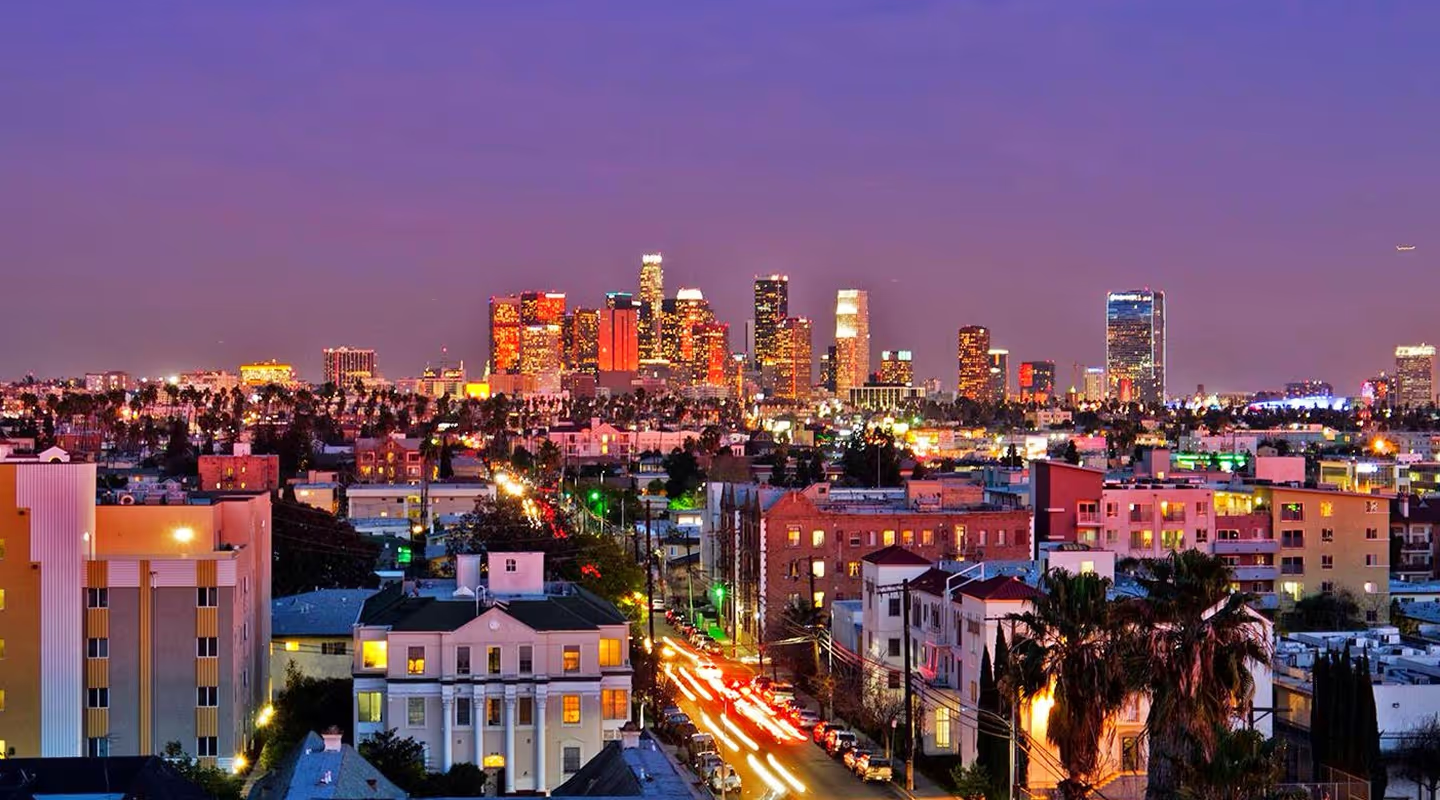
Moving to a new country is one of the most challenging and rewarding things you can do. Moving to Los Angeles — a sprawling, sunny, endlessly diverse metropolis — takes that experience and amplifies it. Living in Los Angeles as an international student means navigating a city that runs on its own rules: car culture coexists with expanding public transit, taco trucks sit next to Michelin-starred restaurants, and you can surf in the morning and hike in the mountains by afternoon.
This guide covers everything you need to know about living in Los Angeles as a student, from neighborhoods and costs to transportation, food, culture, and safety. Whether you are already enrolled or still deciding on a destination, consider this your practical roadmap.
For a broader view of English learning options in the city, see Learn English in Los Angeles: Complete Guide.
What to Expect Living in Los Angeles

Los Angeles is not one city — it is dozens of neighborhoods stitched together across nearly 500 square miles. Understanding this sprawling geography is the first step to feeling at home.
The weather. With 280+ sunny days per year and average temperatures between 60°F and 85°F (15°C–29°C), LA has one of the most pleasant climates of any major city in the world. Winters are mild — a heavy jacket is rarely needed — and rain is infrequent. The sunshine is genuine and relentless, which is a major mood boost compared to cities like London, Seattle, or Tokyo during their grey seasons.
The pace. LA moves fast but feels laid-back. People are generally friendly and informal. First names are the norm, even in business settings. The dress code skews casual. Yet underneath the relaxed surface, LA is fiercely ambitious — this is a city built by people chasing dreams in entertainment, tech, fashion, and entrepreneurship.
The diversity. Los Angeles is one of the most ethnically diverse cities on the planet. You will encounter communities from every continent, hear dozens of languages daily, and find cultural institutions representing traditions from around the world. For international students, this means you are never alone — there is almost certainly a community from your home country here, along with the chance to meet people from places you have never been.
The size. LA is big. Distances that look short on a map can take 30 to 60 minutes to drive during rush hour. This is the single biggest adjustment for most newcomers. Planning your housing location relative to your school is critical — living close to where you study saves hours each week.
The opportunity. LA's economy is one of the largest in the world — larger than most countries. Entertainment, tech, healthcare, international trade, tourism, and fashion all thrive here. For students who want to build professional networks while studying, few cities offer as much access.
Neighborhoods Popular with International Students
Choosing where to live is one of the most important decisions when living in Los Angeles. Here are neighborhoods that international students tend to favor, organized by character and proximity to common school locations.
Koreatown (K-Town). One of LA's most vibrant and affordable neighborhoods. Dense, walkable by LA standards, and packed with restaurants, karaoke bars, and late-night food options. Koreatown is centrally located and well-served by Metro, making it popular with students attending schools along the Wilshire corridor — including Columbia West College, which sits in the heart of this area. Rent for a shared apartment ranges from $800 to $1,400 per person.
Westlake / MacArthur Park. Just west of downtown, this neighborhood offers some of the most affordable rents in central LA. It has a strong Latin American community with excellent street food. It is walkable to the Metro Red/Purple line and close to many language schools.
Downtown LA (DTLA). The city center has undergone massive transformation in the last decade. It now features modern apartment buildings, art galleries, restaurants, and a growing nightlife scene. It is pricier than Koreatown or Westlake but offers convenience and energy.
Hollywood. Iconic and tourist-heavy along the main boulevards, but the residential streets behind them are surprisingly calm. Housing costs are moderate, and the Metro Red Line provides direct access to downtown and beyond.
Culver City. A quieter, more suburban feel with excellent dining and proximity to the beach. The Expo Line connects it to downtown. Slightly more expensive but appealing for students who prefer a calmer environment.
Santa Monica. Beach living at a premium. Beautiful, walkable, and connected to downtown via the Expo Line. Expect to pay significantly more for housing, but the quality of life — ocean air, bike paths, farmers markets — is hard to beat.
CWC offers student apartments from $1,000 per month, furnished and with utilities included, in convenient locations near the school. This takes the stress out of apartment hunting in an unfamiliar city.
Cost of Living in Los Angeles
Budget planning is essential for international students. Here is a realistic breakdown of monthly costs when living in Los Angeles.
Housing: $1,000–$2,000/month. This is typically your largest expense. A shared apartment in Koreatown or Westlake runs $800–$1,400 per person. A studio in DTLA or Hollywood costs $1,500–$2,200. Student housing through schools like CWC starts at $1,000/month furnished with utilities included, which represents strong value.
Food: $300–$600/month. LA is a food paradise at every price point. Cooking at home using groceries from stores like Trader Joe's or local markets keeps costs around $250–$350/month. Eating out at casual spots — taco trucks, ramen shops, Thai restaurants — adds up but is affordable by big-city standards. Budget $15–$20 for a typical restaurant meal.
Transportation: $50–$150/month. A Metro pass costs about $50/month and covers buses and rail lines across the county. If you live near your school (highly recommended), you may be able to walk or bike most days and use Metro only for weekend exploration. Rideshares (Uber, Lyft) are available but add up quickly.
Phone: $30–$50/month. Prepaid plans from carriers like Mint Mobile or Visible offer affordable data and calling. Most international students pick up a US SIM card upon arrival.
Health insurance: $50–$200/month. Required for F-1 visa holders. Your school may offer a plan or recommend providers. Do not skip this — US healthcare without insurance is prohibitively expensive.
Entertainment: $50–$200/month. Museums, beaches, hiking, and many cultural events are free. Budget extra for concerts, sporting events, or weekend trips.
Total estimated monthly cost: $1,500–$3,200. This range covers most student lifestyles, from frugal to comfortable.
For a detailed look at free activities, see Free Things to Do in Los Angeles: Student Guide.
Experience LA while learning English at CWC. Located on the Wilshire corridor with easy Metro access, CWC puts you at the center of everything LA has to offer — with furnished student housing from $1,000/month and programs starting at $87.50/week. Learn more.
Transportation and Getting Around LA

LA's reputation as a car-dependent city is evolving. While a car certainly helps, many international students live comfortably without one — especially if they choose their housing location wisely.
Metro Rail. LA's rail system includes six lines covering key corridors. The B Line (Red) runs from North Hollywood through Hollywood to downtown. The D Line (Purple) extends along Wilshire Boulevard — directly serving the Koreatown area where CWC is located. The E Line (Expo) connects downtown to Culver City and Santa Monica. New extensions are continuously expanding the network.
Metro Bus. An extensive bus network fills gaps between rail lines. The Rapid buses on major boulevards (Wilshire, Vermont, Santa Monica) are frequent and reasonably fast.
Biking. LA is increasingly bike-friendly, with expanding protected lanes and bike-share programs (Metro Bike). The flat terrain of central LA makes cycling practical for short to medium trips.
Rideshares. Uber and Lyft are ubiquitous and often cheaper than taxis. For late-night trips or destinations not well-served by transit, rideshares are the go-to option.
Walking. LA is more walkable than its reputation suggests — if you live in the right neighborhood. Koreatown, DTLA, Hollywood, and Santa Monica all have high walk scores within their cores.
Cars. If you do want a car, used vehicles and insurance for young drivers are expensive. Parking in dense neighborhoods adds another cost. Most language students find that Metro plus occasional rideshares is sufficient and far cheaper.
Pro tip: Choose housing within a 30-minute commute of your school. This single decision has the biggest impact on your daily quality of life when living in Los Angeles.
Food, Culture, and Entertainment in LA
Los Angeles is arguably the best city in the United States for food, and it competes globally with any other metropolis. The cultural offerings are equally impressive.
Food. LA's food scene reflects its diversity. You will find world-class Mexican food (from street tacos to high-end Oaxacan cuisine), Korean barbecue, Japanese ramen, Thai street food, Ethiopian injera, Armenian kebabs, Peruvian ceviche, and everything in between. The Grand Central Market downtown is a food hall that showcases this variety under one roof. For budget eating, taco trucks and small family-run restaurants offer incredible value — a filling meal for $8–$12 is common.
Museums and galleries. The Getty Center (free admission, stunning hilltop architecture), LACMA (the largest art museum in the western US), The Broad (free general admission, contemporary art), and dozens of smaller galleries make LA a visual arts powerhouse. Most museums offer free or discounted student admission days.
Music and nightlife. From the Hollywood Bowl (iconic outdoor amphitheater with affordable lawn seats) to intimate jazz clubs in Leimert Park, LA's live music scene covers every genre. The nightlife stretches from rooftop bars in DTLA to dive bars in Silver Lake.
Outdoor activities. Hiking in Griffith Park (with views of the Hollywood Sign), beach days in Malibu or Venice, surfing at Manhattan Beach, and weekend trips to Joshua Tree or Big Bear offer a range of outdoor experiences that few cities can match — all accessible year-round thanks to the climate.
Film and TV. You are in the entertainment capital of the world. Studio tours, film premieres, comedy shows at the Laugh Factory or Comedy Store, and tapings of TV shows (often free with advance reservations) provide experiences unique to LA.
Festivals and events. LA hosts hundreds of cultural festivals annually — Chinese New Year in Chinatown, Dia de los Muertos in Olvera Street, the LA Pride Parade, CicLAvia (car-free streets for biking), and neighborhood block parties throughout the year.
Safety Tips for International Students

LA is a safe city for students who exercise common sense, but like any large metropolis, it requires awareness.
Know your neighborhood. Safety varies significantly block by block in LA. Before signing a lease, visit the area at different times of day — including after dark. Ask current students or school staff for honest assessments.
Use transit wisely. Metro is generally safe during daytime and evening hours. Avoid empty train cars late at night. Rideshares are a good option after midnight.
Secure your belongings. Petty theft — phone snatching, car break-ins — is the most common crime affecting students. Keep your phone in a secure pocket in crowded areas. Never leave valuables visible in a parked car.
Stay connected. Share your location with a trusted friend using your phone's built-in sharing features. Let someone know your plans if you are going somewhere unfamiliar.
Know emergency numbers. Call 911 for any emergency (police, fire, medical). For non-emergency police matters, call the LAPD non-emergency line. Save your school's emergency contact number in your phone — schools like CWC have staff experienced in helping international students navigate unexpected situations.
Health precautions. Carry your insurance card at all times. Know the location of the nearest urgent care clinic to your home. LA's air quality can be poor on hot days — check AQI readings if you have respiratory sensitivities.
Trust your instincts. If a situation or location feels unsafe, leave. This advice applies everywhere in the world, and LA is no exception.
For a balanced perspective on city life, see Pros and Cons of Living in Los Angeles. And if you are still deciding whether to study in the US, our Study English Abroad: Complete Planning Guide covers the full decision-making process.
FAQ
Is Los Angeles a good city for international students?
Yes. Los Angeles is one of the best cities in the world for international students, thanks to its cultural diversity, extensive English-speaking environment, strong economy, and year-round pleasant climate. The city has a mature infrastructure for supporting international learners, including SEVP-certified language schools, student housing options, and public transportation. Students at schools like CWC benefit from the Wilshire corridor location, walkable Metro access, and a community of classmates from 20+ countries. The diversity of the city also means you can find familiar food, cultural communities, and support networks from virtually any home country.
How much does it cost to live in LA as a student?
A realistic monthly budget for an international student living in Los Angeles ranges from $1,500 to $3,200, depending on lifestyle choices. Housing is the largest expense, typically $1,000–$2,000 per month. Student housing through schools like CWC starts at $1,000/month furnished with utilities included. Food costs $300–$600/month depending on how often you cook versus eat out. Transportation via Metro is about $50/month, and phone plans start around $30/month. Health insurance, required for F-1 students, adds $50–$200/month. Entertainment can be kept low since many of LA's best attractions — beaches, hiking, museums — are free or low-cost.
What neighborhoods are best for students in LA?
Koreatown, Westlake, and Downtown LA are the most popular neighborhoods for international students due to their central locations, Metro access, and relatively affordable rents. Koreatown is especially favored because it is walkable, vibrant, and close to many language schools on the Wilshire corridor. Hollywood offers name recognition and decent transit connections at moderate prices. Culver City and Santa Monica appeal to students who prefer quieter or beach-adjacent environments but come at a higher cost. The best neighborhood for you depends on your school's location, budget, and lifestyle preferences — always prioritize a short commute over a trendy address.
Live and learn in LA — discover CWC's programs for international students. With student apartments from $1,000/month, campus on the Wilshire corridor with Metro access, and over 30 years of experience welcoming students from around the world, CWC makes living in Los Angeles as an international student straightforward and rewarding. Explore your options.