Starting English conversation for beginners can feel intimidating, but it is also the most rewarding part of learning a new language. The moment you say your first sentence and another person understands you, everything changes. This guide is designed to help absolute and early-stage beginners take their first steps in spoken English, from overcoming the fear of speaking to building a solid foundation of essential phrases, practical topics, and proven techniques that will have you conversing in English sooner than you think.
The truth about learning to speak English is that perfection is not the goal at the beginning. Communication is. Every fluent English speaker started as a beginner who made mistakes, struggled with pronunciation, and felt nervous. The only difference between them and someone who never learns is that they kept speaking despite the discomfort.
Getting Started with English Conversation

The biggest barrier for most beginners is not grammar or vocabulary. It is the psychological barrier of fear: fear of making mistakes, fear of being misunderstood, and fear of sounding foolish. Overcoming this fear is the single most important step in your English conversation journey.
Accept that mistakes are normal and necessary. Every language learner makes mistakes, and those mistakes are actually how your brain learns. When you say something incorrectly and receive feedback, whether from a teacher, a conversation partner, or your own self-correction, your brain creates stronger neural pathways for the correct form. Avoiding mistakes by staying silent is the worst strategy because it denies your brain the practice it needs to improve.
Start with what you know. You do not need hundreds of words to have a conversation. Even 50 well-chosen phrases can carry you through many basic interactions. Begin with greetings, introductions, and simple questions. Build from there gradually, adding new words and structures as you become comfortable with the basics.
Find a supportive practice environment. The ideal environment for beginner conversation practice is one where you feel safe making mistakes. This could be a language exchange partner, a beginner-level class, an online conversation group, or an AI chatbot. Avoid high-pressure situations like business meetings or formal presentations until you have built a foundation of confidence and competence.
Essential phrases for your first conversations:
- Greetings: "Hello," "Hi, how are you?" "Good morning / afternoon / evening"
- Introductions: "My name is..." "I'm from..." "Nice to meet you"
- Simple questions: "What is your name?" "Where are you from?" "Do you speak [language]?"
- Polite expressions: "Please," "Thank you," "Excuse me," "I'm sorry"
- Clarification: "Can you repeat that?" "Can you speak more slowly?" "What does that mean?"
- Agreement and disagreement: "Yes," "No," "I think so," "I don't think so"
These phrases are your survival toolkit. Memorize them, practice them aloud, and use them at every opportunity. They will carry you through most basic social interactions while you build more complex language skills.
Simple English Conversation Topics for Beginners
Having topics ready makes conversation much easier, especially when you are a beginner. These everyday subjects require only basic vocabulary and give you plenty to talk about.
Introductions and personal information are the natural starting point. Practice telling people your name, where you are from, what languages you speak, and why you are learning English. These are the questions you will be asked most often, so being comfortable with them builds immediate confidence.
Greetings and small talk are the social glue of English conversation. Learn different ways to greet people formally and casually. Practice common small talk topics: "How's your day going?" "Nice weather today, isn't it?" "Did you do anything fun this weekend?" Small talk may seem trivial, but it is how English speakers build rapport and transition into deeper conversation.
Weather is a universally safe conversation topic. Learn basic weather vocabulary: sunny, cloudy, rainy, hot, cold, warm, windy. Practice simple sentences: "It's beautiful today," "I heard it might rain tomorrow," "I love sunny weather." In Los Angeles, with over 280 sunny days a year, weather conversations tend to be cheerful ones.
Food is another easy and enjoyable topic. Talk about your favorite foods, restaurants you have tried, or dishes from your home country. Simple sentences like "I love pizza," "Have you tried Thai food?" or "My favorite food is sushi" open doors to engaging conversations that everyone can relate to.
Hobbies and interests let you share what you are passionate about. Even with basic vocabulary, you can say "I like playing soccer," "I enjoy watching movies," or "I like to cook." Asking others about their hobbies ("What do you like to do?") is a great way to keep a conversation going and learn new vocabulary naturally.
Daily routines provide endless conversation material. Describe what you do in the morning, what you eat for lunch, how you get to school, or what you do in the evening. These topics use practical, everyday vocabulary that you will need in real life.
For more vocabulary resources, explore English Idioms: Complete Guide with 200+ Examples.
Beginner Conversation Practice Techniques
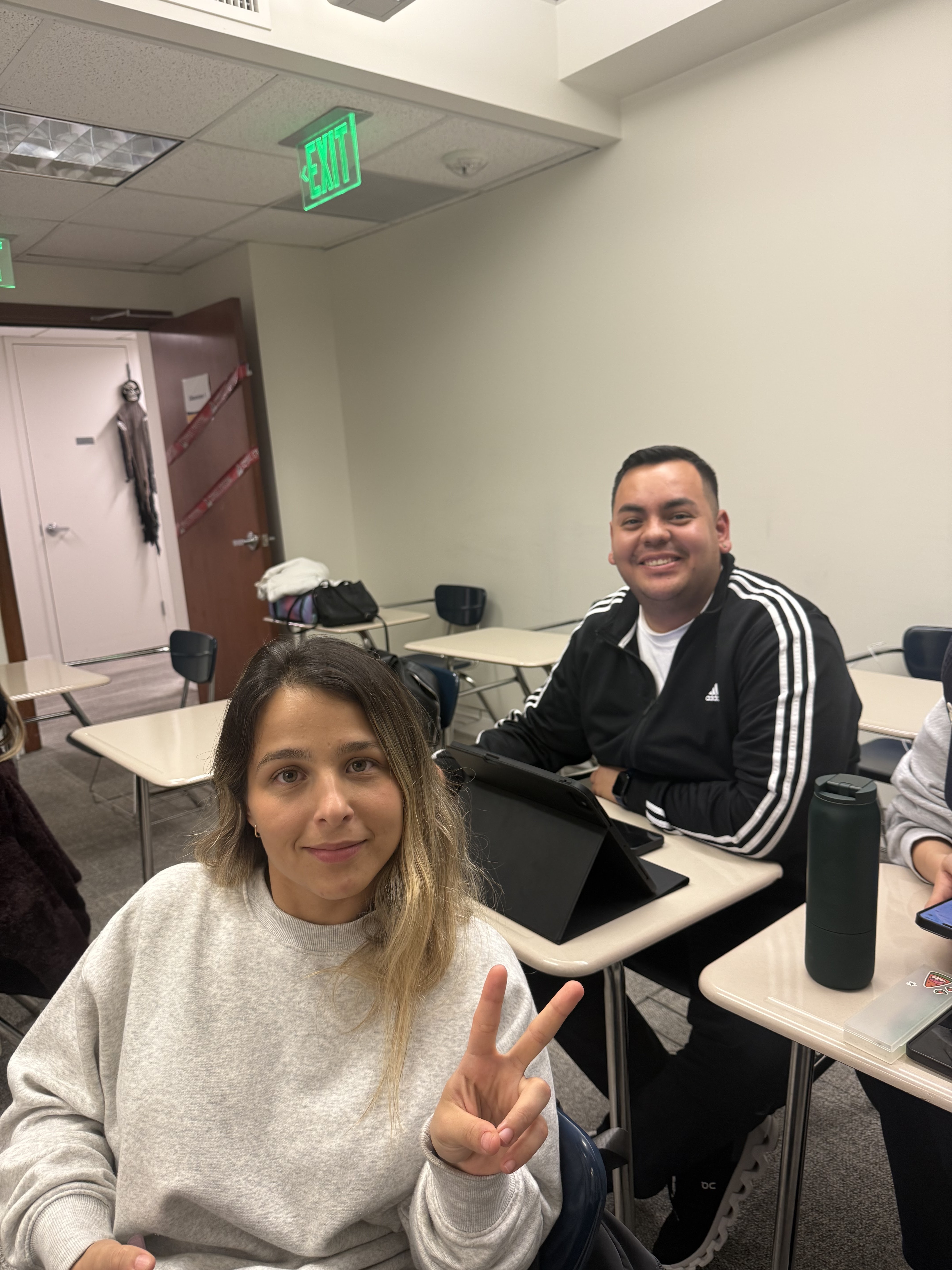
Knowing what to say is only half the equation. You also need effective practice techniques that build your speaking ability and confidence over time.
Listen-and-repeat exercises are one of the most effective techniques for beginners. Find audio or video content at your level, whether it is a podcast for English learners, a YouTube lesson, or an audiobook for beginners, and repeat what you hear. Focus on matching the speaker's pronunciation, rhythm, and intonation. This technique builds your muscle memory for English sounds and trains your ear simultaneously.
Shadowing is an advanced form of listen-and-repeat where you speak along with the audio in real time, slightly behind the speaker, like a shadow. This technique forces you to process English at natural speed and is particularly effective for improving pronunciation and fluency. Start with slow, clear audio and gradually increase the speed as you become more comfortable.
Ready to start speaking English with confidence? Columbia West College's ESS program is designed specifically for learners who want to speak from day one. With 80 minutes of daily speaking class — 6 times more speaking practice than a typical ESL program — beginners build real conversational ability fast. The integrated curriculum connects grammar, speaking, and reading and writing so every concept you study is reinforced through spoken practice the same day. Students from over 20 countries practice together every day, creating the supportive environment that new speakers need. Discover the ESS program at CWC.
Simple role-play dialogues simulate real-world situations and build practical conversation skills. Practice common scenarios: ordering food at a restaurant, asking for directions, buying something at a store, or making a phone call. Write out both sides of the dialogue first, practice alone or with a partner, and then try to improvise variations. Here are a few examples:
At a coffee shop: - You: "Hi, can I have a coffee, please?" - Barista: "Sure! What size?" - You: "Medium, please. How much is it?" - Barista: "That's $4.50." - You: "Here you go. Thank you!"
Meeting someone new: - You: "Hi, I'm [name]. Nice to meet you." - Them: "Nice to meet you too. Where are you from?" - You: "I'm from [country]. I'm studying English here." - Them: "That's great! How long have you been here?" - You: "About two months. I really like it."
Conversation exchange partners provide free, authentic practice. Language exchange apps and websites connect you with English speakers who want to learn your language. You spend half the time speaking English and half speaking your native language, so both partners benefit. This is one of the best ways to get real conversation practice without any cost.
Record yourself speaking. Use your phone to record yourself answering questions or telling a short story. Then listen back. This simple exercise helps you notice your own errors, track your progress over time, and build comfort with the sound of your own voice in English.
Building Confidence in English Speaking

Confidence in English speaking is not something you either have or lack. It is something you build through consistent, positive practice experiences. These strategies will help you grow your confidence steadily.
Set realistic goals. Instead of aiming to "become fluent" (a vague and distant goal), set specific, achievable targets: "I will have a five-minute conversation in English this week," or "I will learn ten new phrases and use them in conversation." Meeting these small goals creates momentum and positive feelings that fuel further effort.
Celebrate small wins. Every successful interaction in English is an achievement worth acknowledging. You ordered coffee in English? That counts. You understood a question and responded appropriately? That counts. You had a two-minute conversation without switching to your native language? That definitely counts. Recognizing your progress keeps you motivated through the inevitable plateaus and frustrations.
Expand gradually. Once you are comfortable with basic interactions, push yourself slightly outside your comfort zone. Add new topics, try longer conversations, or practice with new partners. Growth happens at the edge of your comfort zone, not deep inside it and not far beyond it.
Use language learning apps and online communities. Apps like HelloTalk, Tandem, and italki connect you with conversation partners and tutors from around the world. Reddit communities like r/EnglishLearning and Discord servers for language learners provide supportive environments where beginners can ask questions and practice without judgment.
Immerse yourself in English. Change your phone language to English. Watch English-language shows with English subtitles. Listen to English music and try to sing along. Follow English-language social media accounts. The more English you absorb passively, the more material your brain has to work with when you try to speak actively.
Enroll in a speaking-focused program. Structured programs designed around conversation practice provide the consistency, expert guidance, and supportive community that self-study alone cannot match. At CWC, the entire curriculum is built around speaking. With daily 80-minute speaking classes, proprietary tools like "Connection Questions" that prompt spontaneous real-language use, and weekly presentations that build public speaking confidence, beginners rapidly develop the skills they need to communicate in English.
For a comprehensive approach to improving your speaking, see English Speaking Practice: Complete Improvement Guide.
FAQ
How do I start a conversation in English as a beginner?
The simplest way to start a conversation in English is with a greeting and an introduction. Say "Hi" or "Hello," introduce yourself with "My name is [name]," and ask a simple question like "What is your name?" or "Where are you from?" These basic exchanges are comfortable starting points because they follow a predictable pattern that most people respond to warmly. If you are in a specific situation like a coffee shop or classroom, you can also start with a context-appropriate comment: "This is a nice place" or "Is this seat taken?" The key is to keep it simple and not overthink it. Most people appreciate the effort of someone speaking a new language and will be patient and encouraging.
What are the easiest English phrases to learn first?
The easiest and most useful phrases for beginners are those used in daily interactions: greetings ("Hello," "How are you?", "Good morning"), polite expressions ("Please," "Thank you," "Excuse me"), basic questions ("What is this?", "Where is the bathroom?", "How much does this cost?"), and simple responses ("Yes," "No," "I understand," "I don't understand"). These phrases are short, frequently used, and provide immediate practical value. Learning numbers, days of the week, and common food and drink names also gives you conversation material for everyday situations. Start with about 50 essential phrases, master them through daily practice, and then gradually expand your repertoire.
How long does it take to hold a basic English conversation?
With consistent daily practice, most beginners can hold simple, basic conversations within two to three months. This means being able to introduce yourself, ask and answer simple questions, order food, and handle basic daily interactions. Reaching a conversational level where you can discuss topics beyond the basics, express opinions, and understand most of what is said to you typically takes six months to a year of regular practice. The speed of your progress depends heavily on the amount of speaking practice you get, the quality of feedback you receive, and whether you are learning in an immersive environment. Students in speaking-focused programs like those at Columbia West College often progress faster because of the high volume of daily conversation practice.
Start speaking English today. Columbia West College's beginner-friendly programs in Los Angeles are built around conversation practice from day one. With 80 minutes of daily speaking class, an integrated curriculum that reinforces every lesson across grammar, speaking, and reading and writing on the same day, and classmates from over 20 countries — and 70% of students choosing to extend their studies after seeing real progress — you will go from nervous beginner to confident speaker faster than you thought possible. Contact CWC to get started.