Creative writing is one of the most rewarding ways to develop your English skills. Unlike academic or business writing, creative writing invites you to experiment with language, express your unique perspective, and break rules intentionally for effect. Whether you are an English learner looking to expand your fluency or a native speaker exploring a new hobby, creative writing builds vocabulary, strengthens grammar instincts, and deepens your connection to the English language in ways that no textbook exercise can match. This guide explores the forms, techniques, and exercises that will help you get started and keep improving.
What Is Creative Writing?
Creative writing is any form of writing that goes beyond the standard conventions of professional, academic, or technical writing. It prioritizes imagination, originality, and self-expression over strict adherence to formulas or factual reporting.
Defining Creative Writing and Its Purpose
At its core, creative writing is the art of making things up — or, more precisely, the art of using language to create experiences for readers. This includes fiction, poetry, personal essays, screenplays, song lyrics, and many other forms. The purpose of creative writing varies: some writers aim to entertain, others to provoke thought, and others to process their own experiences through narrative. What unites all creative writing is the writer's freedom to shape language, structure, and content according to their own artistic vision rather than external requirements.
For English learners, creative writing serves an additional powerful purpose: it forces you to use language actively and creatively rather than passively. When you write a story, you must choose words, construct sentences, and build paragraphs — all decisions that strengthen your grasp of English grammar rules and expand your working vocabulary far beyond what reading or listening alone can accomplish. A strong foundation in sentence structure will give you the tools to build varied, compelling prose.
Why Creative Writing Matters for Language Development
Research in second language acquisition supports what many teachers have observed: students who engage in creative writing develop stronger writing skills, more flexible vocabulary use, and greater confidence in English overall. Creative writing removes the pressure of being "correct" and replaces it with the freedom to experiment. When you write a poem, no one grades your grammar — they respond to your imagery, emotion, and ideas. This psychological shift allows learners to take risks with language that they might avoid in more formal settings.
Types of Creative Writing in English

Creative writing encompasses a wide range of forms, each with its own conventions, challenges, and rewards. Exploring different types helps you find the ones that resonate with your interests and goals.
Fiction: Short Stories and Novels
Fiction is the art of invented narrative. Short stories (typically 1,000 to 10,000 words) are an excellent starting point because they are manageable in scope while still requiring all the key elements of storytelling: character, setting, conflict, and resolution. Flash fiction (under 1,000 words) is even more accessible and has become increasingly popular. Novels are the long form, usually 50,000 to 100,000 words, requiring sustained effort and planning.
For English learners, short fiction is ideal because it gives you complete creative control within a contained space. You can tell a complete story, experiment with dialogue, practice narrative tenses, and receive feedback without committing to a months-long project.
Poetry, Personal Essays, and Screenwriting
Poetry is the most concentrated form of creative writing — every word carries maximum weight. Writing poetry in English teaches you about rhythm, sound, word choice, and the emotional resonance of language. You do not need to rhyme; modern poetry is often free verse that explores ideas through imagery and line breaks rather than fixed forms.
Personal essays (also called creative nonfiction) blend factual content with literary technique. They tell true stories using the tools of fiction: vivid description, dialogue, scene-building, and thematic structure. This form is particularly valuable for English learners because you can write about your own experiences — your journey learning English, your life in a new country, your cultural observations — topics where you already have deep knowledge.
Screenwriting — writing for film, television, or web content — teaches economy of language and the power of dialogue. It is an excellent exercise for learners who want to improve conversational English, as screenplays are essentially structured conversations.
Creative Writing Techniques for English Learners
Mastering a few key techniques can elevate your creative writing from basic to compelling, regardless of your current English level.
Show, Don't Tell: The Foundation of Good Writing
The most fundamental creative writing principle is "show, don't tell." Instead of writing "She was sad," show the sadness through specific details: "She sat at the kitchen table, turning her coffee cup in slow circles, staring at the chair where he used to sit." Showing engages the reader's senses and emotions; telling merely informs.
For English learners, practicing this technique is enormously beneficial because it forces you to use descriptive vocabulary, sensory language, and specific detail — all of which expand your active English repertoire. Start by taking simple emotional statements and rewriting them as scenes with physical details, actions, and dialogue.
Using Sensory Language, Dialogue, and Metaphor
Sensory language appeals to sight, sound, smell, taste, and touch. Phrases like "the sharp crack of a breaking branch," "the warm smell of fresh bread," or "the rough texture of old brick" create vivid experiences for readers. Practice writing descriptions that engage at least three senses.
Dialogue brings characters to life and is one of the best ways to practice conversational English in writing. Listen to how people actually speak — in fragments, interruptions, and half-finished thoughts — and try to capture that natural rhythm on the page. Strong dialogue reveals character and advances the story simultaneously.
Metaphor and simile create connections between unlike things: "Her voice was a warm blanket" (metaphor) or "The city sparkled like a circuit board at night" (simile). These figures of speech are central to creative writing and also to fluent English expression. Building your English vocabulary with metaphorical language makes your writing and speaking more vivid and memorable.
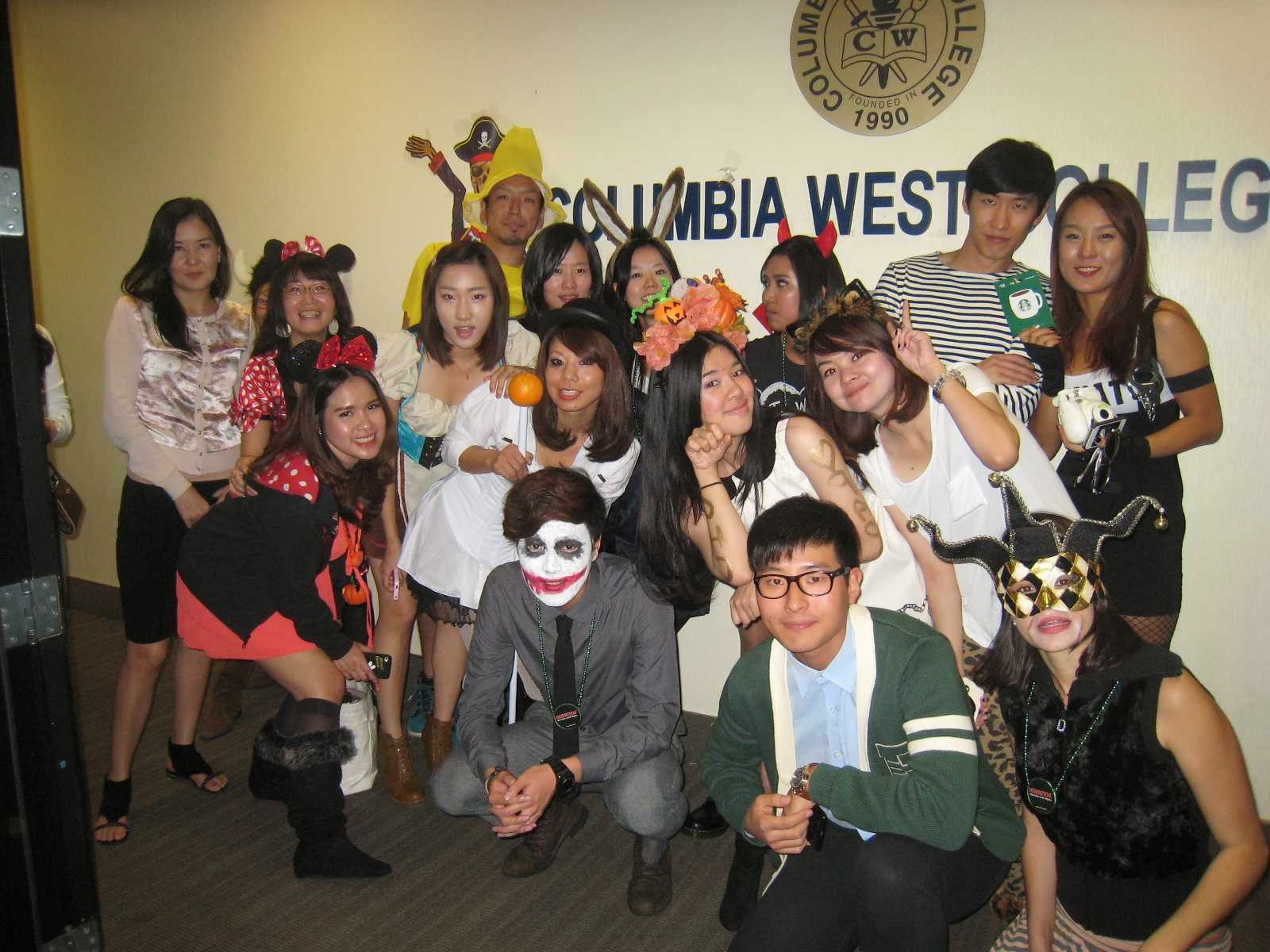
Express yourself in English — explore CWC's creative programs. Columbia West College's speaking-focused approach helps you find your voice in English through real conversation and creative expression. With students from 20+ countries sharing their stories, CWC's classrooms become workshops for authentic communication. Discover CWC's programs.
Creative Writing Exercises to Try Today
The best way to improve at creative writing is to write regularly. These exercises are designed to lower the barrier to getting started and help you build a consistent practice.
Freewriting and Prompted Writing
Freewriting is the simplest and most effective creative writing exercise. Set a timer for 10 to 15 minutes and write without stopping. Do not edit, do not erase, do not worry about grammar or spelling. The goal is to bypass your inner critic and let ideas flow. If you run out of things to say, write "I don't know what to write" until something comes. This exercise builds writing fluency — the ability to produce language without constant hesitation.
Prompted writing adds a starting point: "Write about a door that should not be opened," "Describe your neighborhood from the perspective of a bird," or "Tell the story of an object in your pocket." Prompts spark creativity when you feel stuck and push you into unfamiliar territory that stretches your language skills.
Rewriting and Perspective Exercises
Take a short passage from a book, news article, or story and rewrite it from a different perspective. If the original is written in first person, try third person. If it describes a scene from one character's viewpoint, rewrite it from another's. This exercise develops your ability to manipulate English grammar, tense, and point of view.
Another powerful exercise is to take a familiar story — a fairy tale, a family anecdote, a movie plot — and retell it in your own words, adding your own details and voice. This bridges the gap between comprehension (understanding someone else's English) and production (creating your own), which is exactly the skill that business writing and professional communication also demand.
From Creative Writing to Professional Communication
Creative writing is not just an artistic pursuit — the skills it develops transfer directly to professional and academic contexts. Understanding this connection can motivate even practically minded learners to engage with creative writing.
How Creative Skills Improve Professional Writing
The clarity, vividness, and reader-awareness that creative writing cultivates make you a better communicator in every context. A professional email benefits from the same principles as a good story: clear structure, precise word choice, awareness of the audience, and a compelling point. Business presentations improve when you can use narrative structure to organize information and anecdotes to illustrate abstract concepts.
Companies increasingly value employees who can communicate creatively — in marketing copy, social media content, proposals, and team communications. The ability to write clearly, tell stories, and engage readers is a transferable skill that enhances your value in virtually any professional role.
Building a Writing Portfolio as an English Learner
As you write, save your best pieces. Over time, this collection becomes a portfolio that demonstrates your English proficiency far more convincingly than a test score. Whether you are applying to a university, a creative writing program, or a job that requires strong English communication, a portfolio of polished creative work shows what you can do.
Start a blog, contribute to online writing communities, or simply keep a private folder of your favorite pieces. The act of selecting, revising, and polishing work for a portfolio teaches you the editing process — a critical skill in both creative and professional writing. Programs like those at Columbia West College (CWC) emphasize practical communication skills that prepare students for exactly this kind of real-world English use, from classroom discussions to written projects.

FAQ
How do I start creative writing in English?
Starting is simpler than most people expect. Begin with freewriting — set a timer for 10 minutes and write whatever comes to mind without stopping to edit or correct yourself. The goal is to produce language freely, building comfort and fluency. Once freewriting feels natural, try writing short pieces based on prompts: describe a childhood memory, invent a character, or write a letter to your future self. Read widely in English to absorb different styles and expand your vocabulary. Join a writing group or online community for motivation and feedback. The most important rule is consistency — writing for 15 minutes every day produces more growth than writing for two hours once a week.
Can creative writing improve my English skills?
Absolutely. Creative writing improves English in multiple ways simultaneously. It expands your active vocabulary because you must choose words to express specific meanings and emotions. It strengthens your grammar because you construct sentences with purpose and variety. It develops your writing fluency because regular practice reduces the time between thinking and producing language. It also builds reading skills, as most creative writers are also avid readers. Studies in language education consistently show that students who engage in creative writing perform better on English proficiency assessments than those who practice only academic or structured writing.
What is the difference between creative writing and academic writing?
Creative writing and academic writing differ in purpose, structure, and voice. Academic writing aims to inform, analyze, or argue based on evidence; it follows strict structural conventions such as thesis statements, topic sentences, and citations; and it uses a formal, objective voice. Creative writing aims to entertain, move, or provoke; it uses flexible structures that serve the artistic vision of the piece; and it embraces subjective, personal, and experimental voices. However, the two forms share important skills: clear expression, logical organization, strong word choice, and awareness of the audience. Many of the best academic writers have creative writing backgrounds, and creative writers benefit from the analytical thinking that academic writing develops.
Develop your English writing voice — discover CWC's courses in LA. Columbia West College's programs help English learners build the confidence and skills to express themselves in any context — from creative projects to professional communication. Located in the heart of Los Angeles with students from over 20 countries, CWC is where your English voice comes alive. Learn more about CWC.