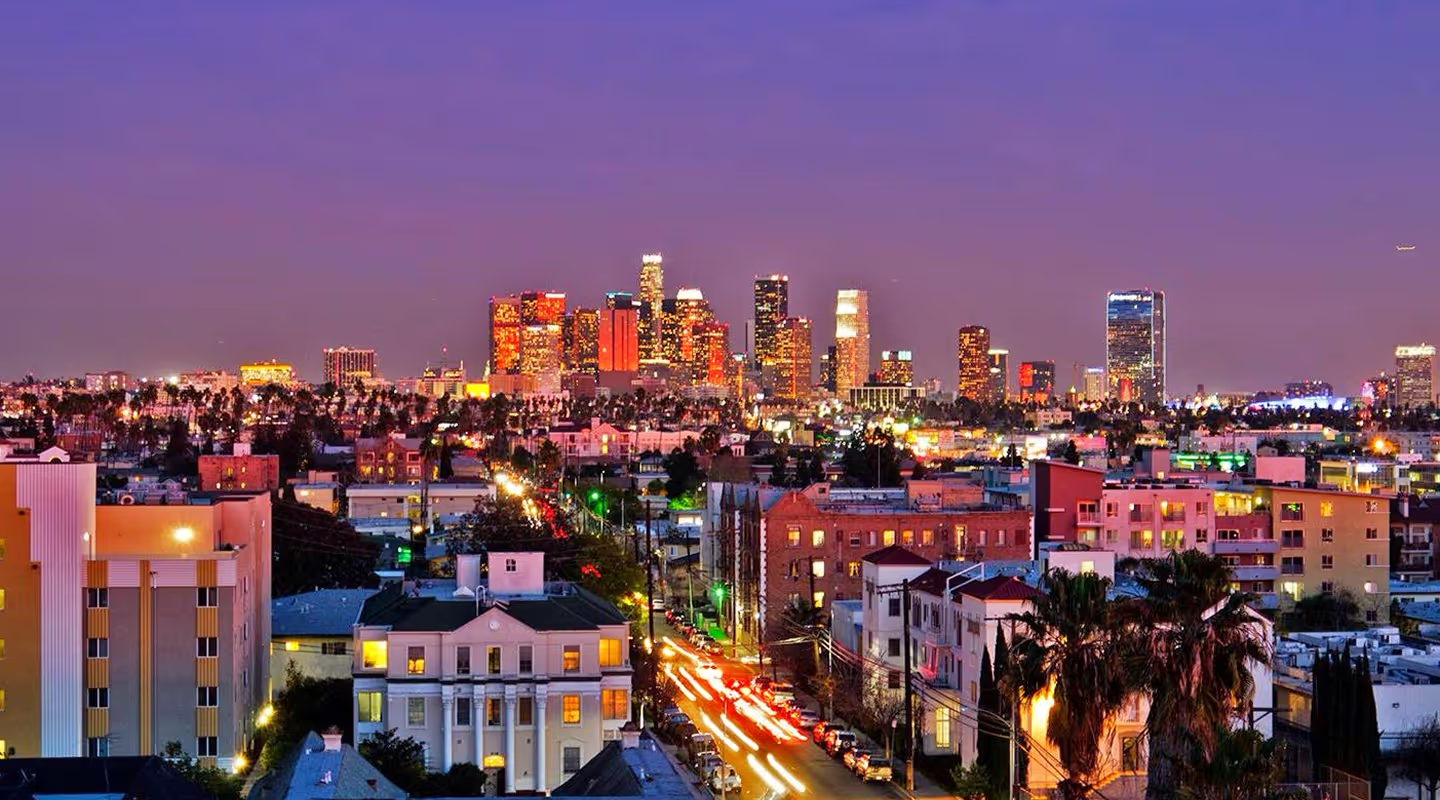
Living in Los Angeles is a dream for millions of people around the world, and for good reason. The city offers a combination of perfect weather, cultural richness, career opportunities, and lifestyle variety that few places on earth can match. But life in LA also comes with real challenges — from the cost of housing to the infamous traffic — that newcomers need to understand before making the move. Whether you are relocating for work, school, or a fresh start, this comprehensive guide covers what living in Los Angeles is actually like, what it costs, where to live, and how to get around.
What Living in Los Angeles Is Really Like

Forget what you have seen in movies. While Hollywood is a real neighborhood, daily life in Los Angeles is far more nuanced, diverse, and grounded than its screen image suggests.
Lifestyle, Pace of Life, and Cultural Diversity
Los Angeles is not one city — it is a sprawling collection of distinct neighborhoods, each with its own personality. Living in Koreatown feels completely different from living in Venice, which feels nothing like living in Pasadena. This diversity is one of LA's greatest strengths. Residents from over 140 countries call the city home, making it one of the most multicultural places in the United States. You can eat authentic food from virtually any cuisine, attend cultural festivals year-round, and hear dozens of languages on a single bus ride.
The pace of life in LA varies by neighborhood and lifestyle, but the overall vibe is more relaxed than cities like New York or Chicago. People tend to dress casually, work-life balance is valued (at least in theory), and the outdoor lifestyle — surfing before work, hiking after — is genuinely part of the culture, not just a marketing cliche.
For international students and newcomers, this diversity creates a welcoming environment. Schools like Columbia West College (CWC), located on the Wilshire corridor in downtown LA, attract students from over 20 countries, reflecting the multicultural character of the city itself.
Weather, Outdoor Activities, and Entertainment
The weather is arguably LA's single greatest asset. With over 280 sunny days per year and mild temperatures that rarely drop below 50 degrees Fahrenheit, outdoor living is a year-round reality. Beaches, mountain trails, desert landscapes, and urban parks are all within easy reach. Griffith Park, Runyon Canyon, the Santa Monica Pier, and dozens of beaches provide free or low-cost entertainment every day of the week.
The entertainment options extend far beyond nature. LA is the capital of the film, television, and music industries. Live concerts, comedy shows, film screenings, theater productions, and art exhibitions happen constantly. For more ideas, explore our guide to unique things to do in Los Angeles.
Cost of Living in Los Angeles Breakdown
Understanding the cost of living in Los Angeles is essential for anyone considering the move. While LA is undeniably expensive compared to the national average, costs vary dramatically depending on your neighborhood, lifestyle, and willingness to budget strategically.
Housing, Transportation, and Food Costs
Housing is by far the largest expense. As of 2026, average rent for a one-bedroom apartment in LA ranges from about $1,600 to $2,500 per month depending on the area. Studios can be found for $1,200 to $1,800 in neighborhoods like Koreatown, Westlake, or parts of the San Fernando Valley. Shared apartments and rooms bring costs down significantly, with shared housing available starting around $800 to $1,200 per month.
Transportation costs depend on your setup. If you own a car, budget for gas ($150 to $250 per month), insurance ($100 to $200), and parking ($50 to $200). Alternatively, a Metro pass runs about $50 to $100 per month, and ride-sharing is widely available. Food costs range from $300 to $600 per month for someone who cooks at home regularly, with eating out adding substantially to that figure.
For a more detailed financial breakdown, see our complete cost of living in Los Angeles guide.
Budgeting Tips for Newcomers and Students
Living in Los Angeles on a budget is entirely possible with the right approach. Cook at home using ingredients from the city's excellent international grocery stores and farmers markets. Use public transit or a bicycle for daily commuting. Take advantage of the city's abundant free entertainment — beaches, parks, library events, museum free days, and community festivals. Share housing with roommates. Choose neighborhoods slightly outside the trendiest areas for significantly lower rent without sacrificing quality of life.
International students studying at ESL schools like CWC can find housing options starting from approximately $1,000 per month, and the school's downtown location provides easy Metro access, reducing the need for a car.
Best Neighborhoods for Living in LA

Los Angeles is a city of neighborhoods, and where you choose to live shapes your entire experience. The best neighborhood for you depends on your priorities: walkability, nightlife, family-friendliness, affordability, or proximity to work or school.
Areas Ranked by Safety, Affordability, and Lifestyle
For safety and family life, neighborhoods like Glendale, Burbank, Pasadena, and Culver City consistently rank high. These areas offer suburban comfort with good schools, parks, and restaurants, while remaining connected to central LA. For nightlife and young professional culture, West Hollywood, Silver Lake, and Arts District in DTLA are popular. For beach lifestyle, Santa Monica, Manhattan Beach, and Hermosa Beach are the top choices, though they come with premium price tags.
For affordability without sacrificing urban access, Koreatown, Westlake, East Hollywood, and parts of the San Fernando Valley offer the best value. These neighborhoods provide walkable streets, diverse dining, and good transit connections at significantly lower rents than the Westside.
Neighborhood Guides for Students and Professionals
Students, especially international students, benefit from living near their school and along transit lines. The Wilshire corridor — stretching from downtown through Koreatown to Mid-Wilshire — is particularly well-suited for ESL students. It offers affordable shared housing, excellent Korean, Mexican, Salvadoran, and other international restaurants, and direct bus and Metro access to campuses, shopping, and entertainment. For a deeper look, read our where to live in Los Angeles neighborhood guide and our profile of life in Koreatown Los Angeles.
Experience the best of LA while learning English. Columbia West College's downtown campus puts you at the heart of Los Angeles, with housing assistance starting at $1,000/month and easy Metro access. Discover student life at CWC.
Transportation and Getting Around LA

Getting around Los Angeles is one of the most discussed aspects of living here. The city's reputation as a car-dependent sprawl is not entirely undeserved, but the transportation landscape has been evolving rapidly.
Public Transit, Driving, and Ride-Sharing
LA's Metro system includes both rail lines and an extensive bus network. The Metro Rail has expanded significantly in recent years, with lines connecting downtown to Hollywood, Koreatown, Santa Monica, Long Beach, Pasadena, and the airport. For daily commuting along major corridors, Metro is a viable and affordable option. Monthly passes cost around $50 to $100.
Driving remains the default for many Angelenos, especially for trips that cross the city. Traffic is heaviest during rush hours (roughly 7 to 9 AM and 4 to 7 PM), and major freeways like the 405, 101, and 10 can be extremely congested. If you do drive, apps like Google Maps or Waze are essential for route planning.
Ride-sharing services like Uber and Lyft are widely used and can be cost-effective for occasional trips, especially when split with friends. E-bikes and e-scooters are increasingly popular for short trips in urban neighborhoods.
Navigating LA Without a Car
Living in Los Angeles without a car is increasingly feasible, particularly if you choose your neighborhood strategically. Areas along Metro Rail lines — especially downtown, Koreatown, Hollywood, and Mid-Wilshire — offer walkable streets, nearby grocery stores, and reliable transit access. Many students at CWC and other downtown schools live car-free, relying on a combination of Metro, walking, and occasional ride-shares.
The key is choosing housing within walking distance of your school or workplace, or along a direct transit line. For more detailed transit tips, see our guide to things to do in downtown Los Angeles, where much of daily life is accessible on foot.
Pros and Cons of Living in Los Angeles
Every city has tradeoffs. Being honest about both the benefits and challenges of living in Los Angeles helps you make a well-informed decision and set realistic expectations.
Benefits: Weather, Diversity, and Career Opportunities
The advantages of living in LA are substantial. The weather alone is a quality-of-life upgrade for anyone coming from a cold or rainy climate. Cultural diversity enriches daily life in ways both subtle and profound — the food, the music, the perspectives you encounter. Career opportunities in entertainment, technology, healthcare, fashion, and international business are abundant. The city's sheer size means there is something for everyone, from quiet suburban life to vibrant urban energy.
For international students and professionals, LA also offers practical benefits: a large network of immigration attorneys and consultants, international community organizations, and schools experienced in serving students from abroad. For the full analysis, see our pros and cons of living in Los Angeles article.
Challenges: Cost, Traffic, and Housing Competition
The downsides are real and should not be minimized. Housing costs are among the highest in the nation, and competition for affordable apartments can be intense. Traffic congestion adds stress and eats into personal time. Air quality, while improved over the decades, still has bad days. And despite its reputation for laid-back living, LA can feel isolating if you do not actively build a social network — the city is spread out, and casual social interactions require more effort than in denser, more walkable cities.
For newcomers, the adjustment period is typically three to six months. Joining a school community, whether an ESL program like CWC or a university, provides built-in social connections that ease the transition significantly. Read about LA's safety for international students and explore the city's rich cultural offerings to make the most of your time here.
FAQ
Is Los Angeles a good place to live?
Los Angeles is an excellent place to live for people who value warm weather, cultural diversity, outdoor activities, and career opportunities in creative and technology industries. The city offers an unmatched variety of lifestyles, cuisines, and neighborhoods to suit almost any preference. However, it is best suited for people who are comfortable with higher living costs, some amount of commuting, and the effort required to build social connections in a large, spread-out city. International students and newcomers often find that enrolling in a school or joining community organizations helps them establish a social network quickly, making the transition much smoother.
How much money do you need to live in LA?
A comfortable but modest life in Los Angeles generally requires a monthly income or budget of at least $3,000 to $4,000 for a single person. This covers shared housing ($800 to $1,200), food ($300 to $500), transportation ($100 to $200), utilities and phone ($100 to $200), and personal expenses. Living alone in a one-bedroom apartment increases housing costs to $1,600 to $2,500 per month. Students on a tight budget can manage on less by sharing housing, cooking at home, and using public transit. CWC provides housing assistance starting from about $1,000 per month, which helps international students keep costs manageable.
What is the best area to live in Los Angeles?
The best area depends entirely on your priorities. For affordability and transit access, Koreatown and Westlake are hard to beat. For beach lifestyle, Santa Monica and Manhattan Beach are ideal but expensive. For a quiet, family-friendly environment, Glendale, Burbank, and Pasadena offer excellent options. For nightlife and walkability, West Hollywood and Silver Lake are popular. International students studying English in LA often choose neighborhoods along the Wilshire corridor — particularly Koreatown and Mid-Wilshire — because of affordable housing, diverse dining, and easy access to downtown schools and Metro lines.
Make Los Angeles your new home while mastering English. Columbia West College, located in the heart of LA's Wilshire corridor, has helped students from over 20 countries thrive in Los Angeles for more than 30 years. With housing support, visa guidance, and speaking-focused programs, CWC makes your LA experience unforgettable. Get started with CWC today.